

The first game made by Wadjet Eye I ever played was “Resonance”. I was drawn to it after seeing several screenshots published on some gaming portal and, as a person very much into pixel art and 90’s style of graphics, I purchased it immediately. What was just a “but a playtest” approach towards one game, quickly became a years long adoration of the Wadjey Eye company and their products.
The game, set up in the near future, features 4 protagonists. First, there’s Ed, an assistant to the prof. Javier Morales, a scientist working on the resonance effects of particles. Anna – prof Morales’ niece, is a hospital nurse having some psychological issues (and in fact she probably should be in one of the “psychological problems in videogames” articles of this blog) and an unbeaten childhood trauma. Detective Bennet is conducting a police investigation on the track of mysterious Antevorta organization. And there’s Ray, a political blogger and a hacker. All four are brought together by a mysterious explosion in the prof Morales’ lab and start acting together to uncover the secrets of the mysterious experiment.
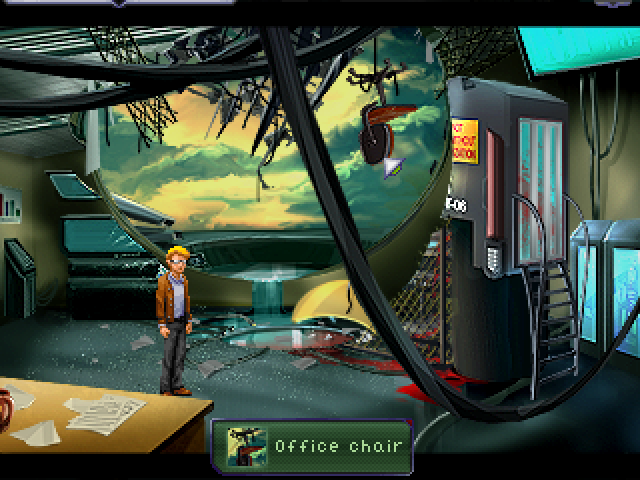
I normally tend to talk a lot about the plotline of the particular game, but I will leave you deliberately in the dark with this one. It is a detective story, that is most pleasant while uncovering things and matching the pieces of the puzzle together, piece by piece. The game has several shocking plot turns and several dangerous timed sequences – enough to keep the player on edge sometimes ( and far less, than in, say, Telltale games – to my delight). But what makes the game and the plotline really interesting is how actually these 4 people interact with each other and how their personal storylines intertwine. Giving control over all four to the player is a bold move (although not a new one…), and forces player to experiment with different setups and combinations of characters to achieve some goals. Anna’s feminine charms and medical knowledge combined with a press/hacker attitude of Ray give different results than grumpy Bennet combined with awkward Ed, while facing the same problem and situation. The game tells its story mainly through that trial and error, and soon a player starts to feel those characters, starts to be invested in their lives and problems.

Well, I don’t need to tell you how important it is , especially for those, who like character-centric stories. E.g. “Game of Thrones” TV series was finished recently, and with the books and the show being really Westeros-oriented than character-oriented (as every fantasy with a pretense to be a mythology or a history book of its setting), yet everybody is talking about characters only…
But getting back to the matter – I often tell, times after times, how important it is to leave some things “blank”, so the reader or a gamer could feel it in by himself. The more product relies on imagination the more “blanks” it really needs. And I will be telling more about the subject when I am ready to talk about Tolkien’s “Silmarillion” (not ready yet, for various reasons…even though I read the book dozens of times for 30 years now…). In “Resonance”, player has got plenty opportunities to experiment and walk a mile in protagonists shoes. The player is forced to play a role, yet, the amount of freedom of experimentation, trying to combine various items together or operate various implements and discussing things with people, is huge and so is the amount of player generated story.
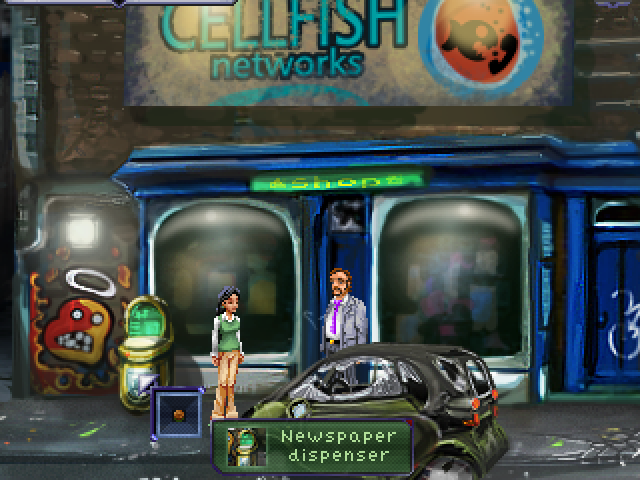
To those of you who played adventure games before, you know exactly what I mean, but for all the rest: imagine the “Sherlock Holmes” story, in which the chronology of Sherlock’s actions is not determined by a shortest possible way to get to the conclusion, while still building the mystery and the climate through narrration, but, rather, by an unknowing narrator, who experiments with the story, not knowing how it will end. This is what happens in games like this one, and this one is particularly good when it comes to its combinatorics.
I am not a big fan of conspiracy theories or conspiracy games for that matter, so the subject of this game did not captivate me as the other games did. I also prefer rather traditional detective stories instead of dystopian future theme (there’s just too many dystopian themes in popculture these days…). But, like I said before, this is the game that got me onto the Wadjet train and the game one could learn from a thing or two.
 Amazing Worlds