Tag Archives: philosophy

“The Hitchhiker’s Guide To the Galaxy” – Douglas Adams’s hillarious look at the mankind.

Humanity is a very sad and pathethic kind of animals. The vertebrae with the biggest capability of destruction of all vertebraes. Additionally, evolutionary mechanics evolved certain things beyond a vertebrae average, and left others completely underdone. It also applies to brain functions – while some behavioral patterns are top notch, other’s are, simply put, “in the dark”.

That limitation leads to a varying spectrum of human misbehavior, starting from domestic violence, through depression and frustration, to genocide. An average man likes to think that all the evil is performed by “the others”, perhaps sick or deviants. In some cases it is true, yet the majority of the bad things is actually done by socially and biologically programmed patterns. There’s a saying in Poland : “an occasion makes the thief”, meaning that even though people might be taught not to steal, there are situations, “occasions”, in which one would.

How to live with conditions like these? How can one retain morality or a stable belief system? Its impossible. In most cases it leads to atheism and misanthropy.

Douglas Adams fights this feeling, not unlike how Terry Pratchett did. Because sometimes it’s better to reforge the sorrow into irony and laughter. And Mr. Adams was merciless when it comes to irony and laughter, enveloping an intricate philosophy of life.

Life, universe and all the rest, in fact. The titular “The Hitchhiker’s Guide to The Galaxy” is a hitchhiker guide to space travel in our universe. It contains a lot of useful information (Wikipedia like) but its popularity is based on one simple fact. It has “Don’t Panic” written on its cover. Now this alone should convince you how brilliant this thing is. Can you imagine a shorter and yet bullseye pun on human ignorance? It really doesn’t matter what our Wikipedia or Internet contain. Its combined knowledge ALREADY is enough to change the world completely, for the better. But it will not happen. Because an average person prefers funny cat memes instead. Or soothing funny dog videos. Don’t panic, humankind.

The story starts with Arthur Dent, an average, not-so-smart Englishman, learning that his longtime friend Ford Perfect is an alien, and that Earth is to be destroyed because it’s an undeveloped patch of universe that needs to be erased because the interstellar highway will be built in its place. Not that it’s sudden – the notice about that was in Alpha Centauri development office for some time now, and noone should care if humans are so lazy and irresponsible that they don’t know about it.  If they really cared they would read it, right? But before the destruction other messages were sent – as it is explained, dolphins tried to warn humans, but humans are so stupid that instead of understanding the complex language they thaught it to be a playful mood and a waterpool ball games and tricks. So dolphins  leave the planet, thanking for all the fish and saying “so long!”.

 

Znalezione obrazy dla zapytania arthur dent
Martin Freeman as Arthur Dent. Remember, always carry a towel. And don’t panic.

Lets stop here for a moment. I’ll show you what human ignorance is. It’s when one says “dolphins are animals inequal to humans, clearly, because they did not develop any civilizations, powerplants etc”. If industrial civilization is the mark of intelligent, advanced life, then it means that Amazonian Indians are animals, right? Because they don’t have factories built. What about Inuits? Traditionally they wear animal skins and dont use electricity. No, in fact you are undeveloped. Your technology usage hindered you greatly. And yes, its about all of us. It frightens me every day how people browse the Internet for answers every day, instead of trying to work it out with their brains. Because technologically inadvanced people do – that’s why an average ancient Atenian was smarter that an average you.

And yet I sometimes see the movies about a scientist deciphering a language of the aliens. What about dolphins? We know they have one. Hell , we know dolphins have names!  That’s what ignorance and arrogance is. Humans can decipher everything because they are so advanced… No. The Earth wasn’t made by any god for you to inherit it. You are but one of many animals in this planets megaecosystem, and not particularily nice species while we’re at it.

The book goes through almost every subject that matters. Sociology, economy, psychology, you name it. Marvin, the much loved paranoid-android, the smartest being in the universe and his hillarious permenent depression shows what strength is needed to see the universe for what it is, without hypocrisy or self-lying. A direct opposition to Marvin’s case are the sspaceship automated door, embedded with an A.I. conded to be happy whenever it opens. Orgasmic “ooh” and “aah” of the idiotic door, while Marvin passes through it with his heavy, depressed steps makes me chuckle while writing this text. Or a moment when Marvin, being alone and wanting to talk to someone, interfaces with a warframe computer, which in turn, commits suicide, allowing pur protagonists to escape.

Obraz może zawierać: tekst
Marvin as it is seen in the movie. The movie is fun, but sits nowhere close to what the book is. Read the book, don;t bother with the movie, unless you read the book.

Arthur Dent is a true human. Meaning his an idiot. A true idiot. His idiocy is a blessing, because a smarter person would go mad if exposed to the same experiences. He sees Earth being destroyed, he’s homeless, the only human alive in the universe he knows nothing about (until he meets with Trillian, whom he met on one of the parties back in England but was beaten in courting by some richman, then exposed to be actually Zaphod Beeblebrox, the president of the galaxy!) . But he’s a middleclass guy with no imagination, living his petty, conformist life. But he evolves as the story progresses, which also is a brilliant embodiment of the human condition. Near the end of the story (6 tomes) he’s a philosophical and religious guru (The Sandwich Maker).

Znalezione obrazy dla zapytania the fool tarot
The Fool. A Tarot card.

The idiot thopos is an important and recurring one. It is tabula rasa, the emptiness, the void to be filled with experiences, the start of the journey. We, humans, are born like that. Empty, unfilled vessels for things and thoughts to come. Tarot for example, has a Major Arcana card symbolizing this state : The Fool, and Arthur Dent is the fool in the same very sense.

Morality, media and politics are discussed with the Zaphod Beeblebrox and Ford Perfect characters. Zaphod, the president of the galaxy, is a showman, a celebrity, distracting people from the real politics. Yeah, humans are so stupid that they fall for every government trick if its exciting enough. Romans used the chariot races and gladiatoral games to achieve this in the antiquity and today governments use one scandal to focus attention and get supoort for the other. Ford is but a journalist, doing his job not because it show the truth or with some other said mission (only naive believe in the journalist mission to show the truth). It’s only about fame and money.

And then there’s a fact that this Universe wants to kill us. Paranoia? No, a reality. Falling rocks, self proud civilizations that dissapered in a blink of an eye, dinosaur extinction. It’s easy, simple and meaningless. And here comes Agrajag, the being killed by Arthur Dent in every incarnation and every lifetime. Agrajag believes it to be Arthur’s hatred for him and plans revenge, while in fact it is just. a meaningless, maliciousless, accident…

Morality versus food consuption is there too, with the restaurant At the End of Universe and a councious Dish Of The Day cow, bred with intelligence to be the tastiest, willing dish. The cow is willing to die, it is its purpose in life, yet Arthur is the only one disgusted by that practice, even though the cow reassures him that its suicide will be painless and by the numbers, and that it really wants it to happen. I know what you are going to say – GMO. No, its not that. GMO might be a way to save humanity from hunger when we reach 10 billion soon. Think about it as a threat of behavioral engineering coming with the same bioengineering tools GMO and microbiology gives us. The temtation of being a Gepetto to our lab Pinnochio might be to great to resist…

Or is it that we humans are so limited we don’t see the forest for its trees? Maybe the cow is right, after all?

When it comes to sociology, Deep Thought, a master computer that calculated the Answer To Universe Life and Everything for millions of Earth, returned a meaningless 42. A correct answer far beyond comprehension of mortals. So the second computer was ordered. The Earth…

Again, I don’t want to spoil this marvelous adventure the saga is. I don’t know any other work that is comparable to it except for Pratchett’s work. The world is cruel, nasty, we die and our lives are meaningless, but the only thing we can do is to be as moral as possible and accept the facts for what they are.

And, like Marvin looking at the message from the Creator to All His Creation, embedded in flaming letters on the mountainside, we can only say “I can live with that”.

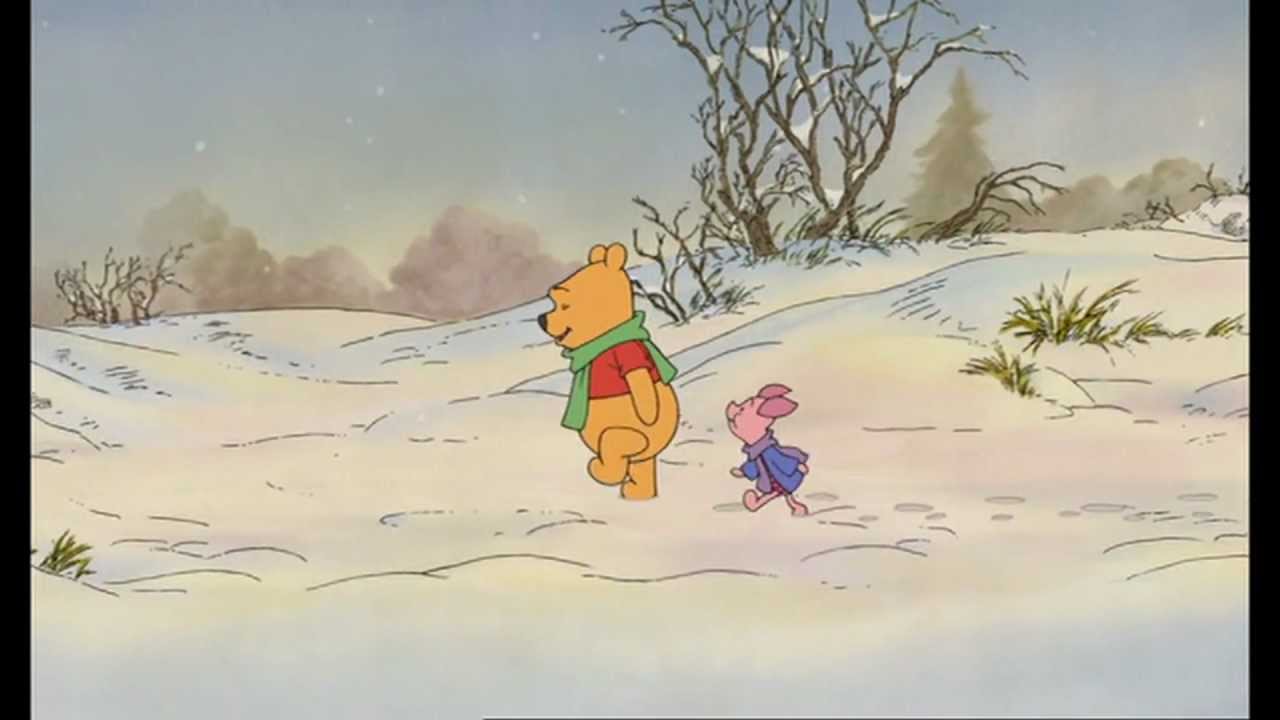


Benjamin Hoff’s “The Tao of Pooh”, “The Te of Piglet”

Almost everyone in the world knows Winnie the Pooh and the Piglet. A.A. Milne’s work became one of the most important pieces of western literature of 20th century. What started as a story based on Milne’s son – Christopher’s, childhood plays, literally helped to raise children in the whole Europe (and beyond). The rich storytelling, emotional depth and a plethora of interesting and memorable characters just had to produce a hit. The value of behavioral programming in the books was understood and appreciated by educational ministries of almost every government, and “Winnie the Pooh” plus the “Pooh’s House” became mandatory lectures in primary schools, such as mine.

I remember I knew it so well, that when the Winnie the Pooh animation was first played on Polish TVP1, I was able to recite almost all its contents along with the dubbing…

So, we, the children, who were programmed by that book, we acquired a lot of archetypes and moral stands by following the adventures of the Pooh. We’ve seen the not-so-wise Owl, grumpy and negative Eeyore, silly Tigger and all the rest of them. And we analyzed their behavior and the interactions between those characters. Which itself is probably the greatest achievement of the author – being able to show various problems and problem solving children might have while interacting with the world. It’s all there, fear, selfishness, trying to become an alpha-child, but also appearing compassion and empathy. And, in the end, the sadness of leaving childhood behind, never to return.

So, with those archetypes and stories in our heads we were better prepared for whatever was awaiting us in the future. We also always kept those pictures with us, sometimes without self-knowledge.

Benjamin Hoff exploits this state. As “Winnie the Pooh” is all about interaction as is Mr Hoff’s work. With the slight difference…

Benjamin Hoff tries to explain Taoism to the western reader by using the Pooh and the Piglet. Yes.

A very difficult task, because our western minds are so focused on individualism and materialism it’s really hard to grasp the very idea of that philosophy. There are thousands of years of history and layers upon layers of cultural metainformation enveloping the Far Eastern philosophical systems, adding to the difficulty.  In fact, without dozens of years of studying and trying to understand all there is about the Chinese culture, grasping Taoism would be probably impossible.

But we have Winnie the Pooh and its archetypes, ideas and emotions, remember?

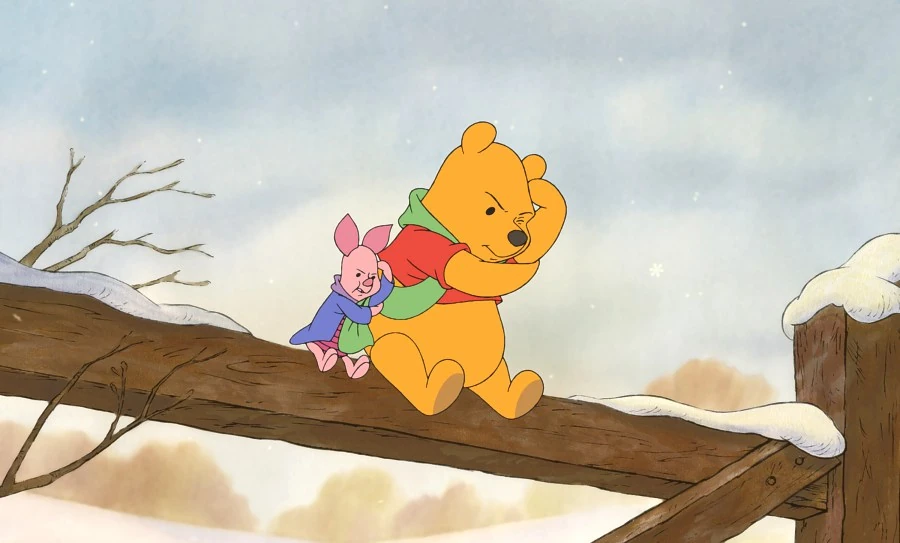
Image result for snows it snows pooh
Unwilling taoist philosophers.

What the author does here is just brilliant. He based his work on the tacit knowledge (oh how I love the subject, I wrote my thesis on the tacit knowledge in computer science and done some other scientific work in the area 🙂 ) of the human brain, the things we learned from the Pooh, and that’s how he made it possible for us to understand things, that, otherwise, would require a lot of studying.

First, let me explain you a little about that tacit knowledge thing, so you could easily understand what’s going on. Did you ever listened to hydraulic heaters being filled with water? Did you ever listen to the DVD or CD drive reading a particularly difficult medium? Remember the sounds? Remember how they were able to tell you if everything is going well or not (especially with the drive case)? Visual example: some individuals are able to tell that it’s going to be raining by observing the change of the colour of the air by looking at some background. That is the thing – it’s very hard to explain it to others, but you just know. Another word that is tightly connected to tacit knowledge is a meme. I am not talking about the Internet cat pictures here. A meme is the package of information that defines itself and can be digested and transmitted internally and through socialization in an unchanged manner, involuntarily, and for some, difficult to explain, reason it’s valued by brains enough, to store that information indefinitely. Beethoven’s 5th – “ta da da dam” – everybody knows that, rigth? A meme. Indiana Jones theme – its first notes – a meme.

“Winnie the Pooh” produced a lot of memes that are stored inside our brains.

And this is what is going on in Hoff’s works. Pooh seems to be the perfect character to explain the wu wei and the pu principles to the western reader.Winnie the Pooh embodies those principles. He is doing things the way a taoist master would do, and he perceives the world in the same way. Simply, accepting the world for what it is and not trying to change it. Just living along it. As opposed to the Pooh, Eeyore is a taoist anti-example, the western man, unhappy, changing the world, trying to get into the depth of things that cause him only sorrow (he’s basically me :)).


“The more it snows (Tiddely pom), the more it goes (Tiddely pom)” – says the Pooh. Uneducated, silly, empty, he lives the life the taoist way. And the “tiddely pom” says everything is there to say in taoist way.

The tree just is, grows, and that’s that. The rain just falls, and that’s that. People die, and that’s that. Don’t try to fight it, don’t try to understand it, it’s the tao.

I am not a taoist myself (obviously, I’m Eeyore), because I compulsively fight for understanding and truth, and that leaves me more and more frustrated in life. This is what tao wants us to avoid in lives. Well, I do my things because I chose so, as I chose to understand taoism, and I prefer my option but it’s a hard, hard road…

My face everyday kinda looks like that of the Piglet on this pic…

The Piglet is a completely different story in Hoff’s works, one much closer to my heart. The ideal of te introduces the concept of what is known in Poland as a proverb “when you have a soft heart, you need to have a tough butt”. But adds to it one important idea- that one cannot be a hero without being soft, without care for the people. In fact, Hoff proves, the Piglet is the only character in the books who is able to do anything. All others just talk or do nothing. It’s the Piglet who saves Eeyore who fell into the river. The small creaature, without self-confidence, always scared, in fact is the only character who conquers his own vices, steps out as a true hero of the day. And whenever I think of the real life heroes, they were always Piglets, people who cared, people with flaws but they were able to conquer themselves for the cause.

I don’t want to bring everything out to you, because it would be best if you consumed these two booklets together, absolutely worthy of doing so, especially if you’re interested in philosophy, as I am. And if you’re not, it’s one of the examples how deeply in us the Pooh resides, even today.


Davey Wreden’s marvels: the “Stanley Parable”


Sometimes during browsing for a game or a book, an item catches one’s immediate attention. Such was the case with “Stanley Parable”. I think it was the screenshot with a man sitting next to his computer in a darkened office room that kept me instantly interested. Oh, I know that picture all too well – sitting in a dark room, doing work rapidly because of some deadline, or because some software failure. It happens very seldom in my life these days, as I became better and better (and more careful) of what I am doing with age, but I do remember sleepless hours. There was a point in my life (20 years ago, when I was just starting my career) where I had a sleeping bag ready in the server room in case I needed to stay at work for a very long time. The feeling of insecurity, tired, automated performance of the job that should be everything but repetitive (coding is a creative process) causes some minor traumas and makes people very stressed at the slightest possibility of the situation happening again. So, by looking at the screenshot I felt also stress. I needed to investigate.

This is story about a man named Stanley, whose job is to press buttons whenever they appear on screen. Yes. Not the other way around. One day though, commands stop displaying on screen. What did Stanley feel at the moment of leaving the corporate grinder? This is a question a player must answer because at that very moment player becomes Stanley.  The quest for answer what actually is freedom, and what are its limitations begin.

Stanley is not alone though. He’s accompanied by the brilliant Narrator. Narrator tells the story of Stanley, urging him to go the predestined route of the story. Stanley (the Player) does not say anything in return but can act. The dispute against the Narrator expectations starts. Narrator tells Stanley to go through a door, but Player may actually never leave the room in a complete act of defiance not only against the Narrator but the game itself! Again, I find no words how brilliant it is. Should one decide to go against Narrator’s wishes with silly behaviour and childish (sometimes) acts of defiance it will always result in Narrator’s comment or riposte. And lead to unforeseen consequences. Free will can lead to bad results after all, it does not guarantee success nor happiness. Following one’s “destiny” though may actually fulfill that destiny, only leaving that person with a feeling of complete disappointment, emptiness and striving for more, even though Narrator summarizes it as “happily ever after” ending. The act of the ordered storytelling becomes boring, and the whole story about Stanley becomes a story about what makes the story (or life for that matter – the most personalized story of them all) interesting.

The answer for that question is not an easy one and open for an interpretation for tens of thousands of years, of course.

For me the answer is: chaos. The ultimate creator of diversity.

Chaos surrounds us, defines all matter and energy and thus life and intelligence itself. And as above so beyond: the stories, whenever they become ordered they become dull. Yet again , entropy is at work here. The more ordered the system, the less happens inside that system, be that thermodynamics or telling tales. In Stanley Parable, player starts to feel obligated to raise the entropy of the system by the childlike “trial and error” and “lets see what happens when I stick the nail into the power socket” attitudes. Narrator scolds these acts of defiance and takes this personally, and , although sometimes it is hilarious to defy him to see what he’s going to say next, the Narrator is not the nemesis here.

The world is. The universe, biology and its outcome: society, are. Systems that shaped us with deterministic fates (not very nice but accurate title of one of the records I’ve listened to in my life sums it up: mate, feed, kill, repeat. ) We, as humans, tend to think we are masters of our destinies, that we are above all that, but are we really? We are born, go to school, go to work, get married, have families, get old and die. With some deviations – this rule applies to every human on the planet.

In the globalized world of corporate cultures, this life has become unbearable for some.

Stanley Parable is a philosophical discourse, recursively focused on the player asking and giving the answers. It’s not possible to play this game without thinking about what culture and the way we are being raised, does to us. At one point Narrator, in genuine act of care…draws a yellow line on the floor to lead us to the happy ending. Isn’t that what parents do for us? Isn’t that what we rebel against as teenagers?

Brak dostępnego opisu zdjęcia.
Narrator wants to help us…


Our acts of defiance and urge to explore the world around us sometimes fails. Narrator then restarts the game. The story stops. It is death, in game’s internal language. But after continuing we start to see that it is actually not the end. The world changes which each trial a little. If we decide to enter the broom closet too many times, against Narrator’s wishes, we will find the broom closet door being barred and nailed down after the restart. This makes each trial a part of a one big story.

The game is hilarious (actually, best philosophers of the XX century, according to me , Pratchett and Adams, also chose comedy to share their point of view). Narrator has his own feelings, and with showing those, he gives a player a great feedback on undertaken actions, effectively breaking the walls between reality and the game and the nature of games.

Oh dear, life is a game…

Brak dostępnego opisu zdjęcia.
At some point Narrator forces us to play “other people’s” game….


Davey Wreden is a very talented game developer. Even if he stopped developing games – he already took his place in the hall of fame…The goal I am still trying to reach, and probably will never succeed (although I am trying pretty hard, I hope to release my first game this year). I’ll get back to Davey and his second title, equally brilliant, soon.

About trailers. Below I am posting the two trailers of the game. The second, called the Raphael Trailer, is a response to a letter sent by a player, a young teenager probably with ill misconceptions about women,  criticizing game for not having enough feels 🙂 A brilliant response, with Narrator’s voice!

Launch Trailer:


Rapahel Trailer:


“Sinuhe” or “The Egyptian” – an emotional journey through perils of humanity.

“I, SINUHE, the son of Senmut and of his wife Kipa, write this. I do not write it to the glory of the gods in the land of Kem, for I am weary of gods, nor to the glory of the Pharaohs, for I am weary of their deeds. I write neither from fear nor from any hope of the future but for myself alone. During my life I have seen, known, and lost too much to be the prey of vain dread; and, as for the hope of immortality, I am as weary of that as I am of gods and kings. For my own sake only I write this; and herein I differ from all other writers, past and to come.”

As an avid book reader I have always a stash of books being read ( I tend to read several simultaneously) or waiting to be started, so it’s a seldom thing for me to discover something completely new and unheard of before. It’s seldom, but sometimes it does happen. I would probably never discover Mika Waltari’s books if not for my wife telling me at one point to read it. I was reluctant at first – I had my unending book stash waiting to be read after all… She found a 20+ years old edition of “Sinuhe” and gave it to me.

I have to say one thing – I am a cynic. I don’t believe in gods, fate and afterlife. I generally perceive humankind as flawed, morality as a side effect of evolution and cause-and-effect chain as random and nondeterministic. This might make it easier to understand why I love this book so much. I am also an archeology and history geek so just shouting “ancient Egypt” makes me instantaneously interested.

“Sinuhe” is a life story told by Sinuhe the Doctor, a bitter man who has been-there-done-that to loose it all, including his freedom. It’s a chronological life journey from his youngest years till senility, and his life is full of personal drama intertwined with historical and political events of the age he lives through. And an interesting age it is – Sinuhe was born just before Akhenaten‘s religious reforms and the social and religious turmoil afterwards.

Image result for nefernefernefer
Edwing Long’s “Love’s Labour Lost” – Nefernefernefer…

J.R.R Tolkien once said that the most interesting stories are the stories of falling from grace, the fall of humankind or a fall of an individual. I agree and it is so in this case. Sinuhe makes mistakes and learns life the hard way. He has a privileged start and knows no pain or hunger, but his teenage rebellion and lust towards Nefernefernefer (probably one of the most scary femmes fatales in literature…) set’s him on an unforgetable and painful journey of re-evaluation of human condition. Love and innocence yield the horrible outcome as Sinuhe loses everything really important in life to learn it after the loss. Make no mistake, he is not an idiot! On the contrary, which he proves by becoming a scholar and a pharao’s doctor. His mistakes come from another source – human inability to know the outcome of our actions and frailty of life. The protagonist reaches the bottom of the human existence (the description of his time in the House of the Dead is one of those unforgettable pieces of literature in my life) to lift himself up again with the tremendous force and will. At first vengeance and regret are the motors of his actions (like in “Monte Christo”). He has his revenge but then he discovers that there’s so much more to life than that. Forced to travel with a slave he broadens his horizons by visiting the countries of the Akhenaten’s era – Babylonia, Hittites and Minoans to learn their ways and the ultimate truth – no matter where people live and what are their beliefs – they are still humans. He learns perfect love and friendship just to lose them, he receives power to learn that power comes with a price, and all that humans search for in their life can be very close, yet sometimes one has to travel the world to learn how to find it. The wise Sinuhe learned everything too late and so he writes his papyrus so a potential reader could learn from his life. This is the altruistic act of a human (even though he denies it himself) who wants to spare another human and save him from the pain and loss.

Saying Mika Waltari’s “Sinuhe” is interesting would be like saying that the Sun is somewhat warm. The feels, the events, characters are brilliant and the lesson one receives from our good Doctor is invaluable.

“For I, Sinuhe, am a human being. I have lived in everyone who existed before me and shall live in all who come after me. I shall live in human tears and laughter, in human sorrow and fear, in human goodness and wickedness, in justice and injustice, in weakness and strength. As a human being I shall live eternally in mankind. I desire no offerings at my tomb and no immortality for my name. This was written by Sinuhe, the Egyptian, who lived alone all the days of his life.”