

Fantasy genre… A very problematic subject these days. We are long past the freshness of the theme that was one of the most important literary milestones of the last century. With the revival of the mythological storytelling J.R.R. Tolkien and C.S.Lewis initiated, a huge amount of works followed. Some of them created new, compelling worlds, and some of them went into oblivion. With those on the market, a number of fantasy RPG systems followed, and evolved along new fantastical prose releases.
Soon, they begun to intertwine with the newly begoten feedback loop.
Well, it’s not that the loop’s cause-and-effect thing was new. From the beginning of humankind the stories made people to invent new stories, which in turn affected the source. Think about minnesängers for a moment. The court tradition of giving entertainment with courtly love songs shaped the courtly love of the western medieval times, which in turn shaped the expectations of the content created and performed by minnesängers. This effect is visible is every human activities there, because human brains are highly susceptible to become a meme transmiters (by the way, it’s really telling if the person understand a meme with it’s original meaning or thinks about cat pictures instead. It really is.).
In the memetic chaos of the transmitted fantasy stories it is really hard to pick those that are not just a waste of times. How many times did we, readers, start a novel to understand this is again about some new type of elves and dragons, in the postmodernistic, combinatoric new flavours we could invent on our own while commuting to school or work? How many times the cross-product of those fantasy flavours tried to hide the shallow plot, pathethic world building and force us to focus only on the facades of protagonists? I am not saying that knowing to what brood of Quendi Elwë Singollo (“Silmarillion” – we’ll get there, in time…) belonged to is not important – it is, but only because it serves the higher purpose of storytelling. There’s a deep reason why it’s there and why it is important for the readed to learn the lore.
Majority of fantasy however is estranged from the idea and therefore, a waste of reader’s time.
It seems however, some publications never aspired to the higher literature and followed the road of combinatorics, just to become something better in the process.
The “Riftwar Saga” is one of those. Imagine, that 40+ years ago, a group of students, fantasy genre fans from California, started playing a Dungeons&Dragons RPG game. Filled with RPG creativity, they started to shape the world of their adventures. That’s how Midkemia, the continent and one of the worlds of the saga, was born. Gradually they filled it with characters, events and a backstory that at one point caused one of the players to write about it in a form of a novel – Raymond E. Feist.
I must say this: Riftwar is guilty of reusing the existing tropes, like elf kind combinatorics (to the point where names are actually taken from Tolkien’s works: e.g. “moredhel” is Sindarin for “dark/black elf”..), adding dragons and princesses, kings and squires, magicians and impending world dooms. There is not fancy language there, or brilliant rethoric forms. I know people that were cast off in the beginning by this saga beacause of the naivety of style and story at the beginning. One can see how author developed as a writer over decades since publishing the first book, and the change of style is really flashy.
But in the end, mr Feist did the job. And he did it magnificently.
I mentioned the stories being social programming before. We, as humankind, tend to repeat story patterns over and over again to be able to actually tell something new with the old elements. Again, I can see similarities to information technology – stories told anew are new revisions of the same program. Updates if you will. And it really does matter how the story is told and what new info it contains, rather than what elements it is using to produce that new meaning For example, one can say a story about Cinderella in a classic way, or making her a vampire that lives with humans and masquerading as a poor girl to prey on their blood.
What Riftwar Saga does is telling a story of epic proportions. It extends in time for more than one lifetime (meaning some characters will be born, grow old and die before one finishes the books…), it contains multiple metaplots on a cosmic scale, played along the main storyline. It has epic battles and unexpected turns. That are elements that many other stories have.
What it does have than not many other products doesn’t have is how it produces emotions. I don’t know many more examples of books that made be stuck with the book and not wanting to let go until I read everything published. And I do include the fantasy sagas written over 6 last decades – I read probably majority of those. So I stuck with Riftwar for the feels…
In the first book we get to know our Pug the orphan, who becomes the magician, and his friend Tomas, who finds a dragon and an ancient armour. A simple, cliche start. But then the war starts. A rift between the world of Kelewan and Midkemia is opened and Tsuranni war parties invade through it. Midkemia is engulfed by flames of war, Pug is being enslaved and taken to Tsurannuani Empire and the war is almost lost.
But Pug is special. Special in ways beating Harry Potter tenfold. He becomes THE mage. The reader follows Pug in his ventures to learn that the invation is but a tip of an iceberg, because the ancient, sinister legacy of the Old Entities, the Valheru, is still alive. And there are other beings in other planes involved as well.
The story spawns another story (a fractal again!) in and RPG manner, yet in a convincing and consistent way. Feist also adds new heroes, but always retains the balance – he always has a point there (unline George R.R. Martin, who just adds characters irrelevant to the story just to kill them), always retaining the quantity and readers focus. It starts with a war and ends with a war, there are epic deeds and battles, dragonriders and romance, politics and vengeance. All baked to an unforgettable experience.
Then there are multiple worlds and civilizations, each completely different from the other. The feeling and the culture of the Empire books are absolutely different from the feeling of the stories placed in Midkemia. But these are human empires. I couldn’t tell you how alien elves feel in this saga. Rich, rich, amazing worlds.
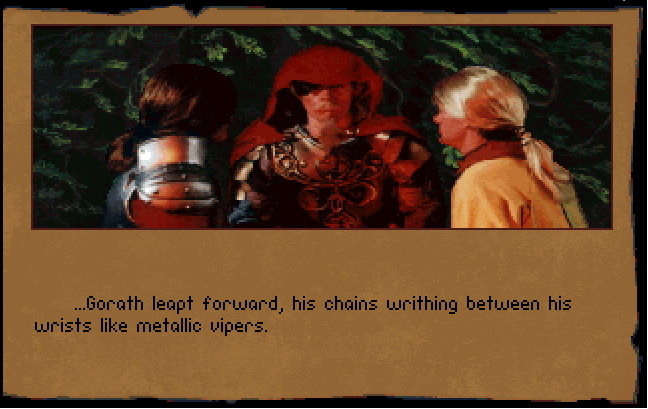
Another thing is how I learned about it. With an RPG videogame. “Betrayal at Krondor” is to this day one of the best cRPG games I have ever played. Feist sanctified its story writing a book based on a game based on his books. As he did with “The return to Krondor” game. BoK allows player to explore the world and characters in an interesting plot, intertwining with the main plot of the saga. Moreover, one story arc (the Crawler) introduced by devs and taken up later by Feist is one of the most interesting plots in the whoe series.
The story starts with the Pug and ends with the Pug’s end. But it never ended for me.
You know what? I think I’ll re-read it this year.
Last but not least, the chronological reading order that you should read the saga with:
Magician
Jimmy the Hand (Starts During Magician)
Honoured Enemy (During Magician)
Murder in LaMut (During Magician)
Daughter of the Empire (starts During Magician)
Silverthorn
A Darkness at Sethanon
Servant of the Empire
Krondor the Betrayal
Mistress of the Empire
Krondor the Assassins
Krondor Tear of the Gods
Jimmy and the Crawler
Prince of the Blood
The Kings Buccaneer
Shadow of a Dark Queen
Rise of a Merchant Prince
Rage of a Demon King
Shards of a Broken Crown
Talon of the Silver Hawk
King of Foxes
Exiles Return
Flight of the Nighthawks
Into a Dark Realm
Wrath of a Mad God
Rides a Dread Legion
At the Gates of Darkness
A Kingdom Besieged
A Crown Imperiled
Magicians End

 Amazing Worlds