Vampire the Masquerade – the cat’s particulars. Gehenna and clans – part 2.

The mythology of the World of Darkness is a very complex thing. It was developed by a legion of people for 30+ years now, and it consists of many books, novels and supplements. The new plotlines were added and the existing ones refined. Of course, it often resulted in contradictory effects, like e.g. some metaplots events happening in only specific revisions of the setting, but overally it’s a smart and deep lore.

The whole setting is a one doomsday story. It really doesn’t matter when one places one’s sessions – be that ancient times, medieval, victorian or contemporary – there’s always a feeling of impending doom present. The fear for destruction of one’s being and the world around. The End of the World, the Apocalypse (Werewolf), the Oblivion (Wraith), the Banality (Changeling) and the Gehenna (Vampire). This one thing defines the whole mood of the each story told in that universe.

Is it true what I just said? On the second thought – not really, because, as always, it depends of the players how and what they want to play. As with every other setting, Vampire (and the whole WoD) allows one to tell all kinds of stories. You want comedy? No problem, you want action movie? Easy peasy. You want a slice of life? Absolutely.

The thing is all of those somewhere, somehow have always the bitter aftertaste. The comedy could be silly or really funny but sooner or later the vampire has to feed. Hunt or be hunted. That’s why one of the first most visible things in the lorebooks is how a vampire cannot maintain the relations with his mortal family. Well, she can try, but it won’t do good to anyone… On the contrary.

The vampiric state in VtM is a peculiar thing. No vampire knows for sure what are it’s origins. Many tried to explain the thing scientifically (Malkavian vampire Dr Douglas Netchurch…) to fail – there’s so many mystical and paranormal elements to the problem it’s just not possible to use just science to explain it. Some perceive it as a superhuman eveolutionary adaptation.  The ultimate predatory state, if you will. Some see it mythologically -as a curse. Such is the case of those western vampires, mostly from the Sabbat sect, believing that vampires come from the first murderer, Caine who slew his brother Abel, and was curse by God., and as such was condemned from the very start as was any offspring he dared to create.

And here’s the problem. It’s not the only possible explanation to it. First of all, Chinese vampires do not share that belief, and in fact, they are so bizarre in comparison to their western brethren, it sometimes makes the Caine story completely invalid. There are also multiple beliefs around how Caine came to power around western vampires (as stated in the most important vampiric text: “The Book of Nod”). One says he got his power from Lilith, who, predated him as a vampire (“Revelations of the Dark Mother”).  There’s an Egyptian strain, believing in Set as the first and the most powerful one, there’s an Arabic one, believing in Haqim as the progenitor… Many, many cults and beliefs, completely blurring the truth, whatever it may be.

The major belief, and the subject of coflict is the notion that Caine has created their first offspring, three vampires at first (the Second Generation) that created their offspring (The Third Generation) and lived with them in an ancient city of Enoch. But vampires are not nice, and curse or not, The Third Generation slain and eaten the Second. Caine left with grief and anger and the mithical Deluge was sent by God to cleanse the Earth from vampiric disease.

But some vampires from the Third Generation survived. These are known as Antediluvians, one of the scaries entities in the World of Darkness. Hidden, unbelievable powerful, godlike, always scheming and pulling all the strings.

All vampires fear that, if in fact Antediluvians exist, one day they will rise from the vampiric slumberstate – Torpor – and devour everyone, human or vampire. That is known as Gehenna in vampiric mythos.

Caine, Second and the Third Generations…

Aparrently only but a number of vampires believes in the whole Caine and Antediluvian thing. Camarilla sect vampires does not, and treats the thing as an allegory, or a myth only. Sabbat, very nietzchean in their ways, on the contrary – the very existence of the sect is dedicated to oppose the Antediluvians. That makes them thing of the organizations like Camarilla pawns in the hands of Antediluvians, and therefore, an enemy.

That is the genesis of vampiric Jyhad, the everlasting war. That is the mechanic that brings the doom to vampires. That is the mechanic that makes them destructive beings, unable to create in the long run, and, by looking at the bigger scope of WoD – tools in the hands of godike creatures of the night.

Now add another brick to the wall: 13 base vampiric clans come directly from Antediluvians. This makes the war a patricide war, and what can be more psychologically weighting than a mortal combat with one’s family? Aditionally, each clan bears a flavor, something of their progenitor is in their blood, giving them their powers and the curse.

The implications of that are grave. Just imagine – a part of your scary grand-grand-grand-grand-grand-grand……. -grandpa is a part of you…

Image result for vampire clans
The clans…

Lets list the clans:

Ventrue – the vampiric nobility, and creators of the Camarilla.

Brujah – the rebelious warriors, in the days of old believing in humanitarian pronciples, now reduced to bravos.

Gangrel – beastlike Gypsy nomads.

Malkavian – deranged nutjobs, but there’s an immense knowledge on their madness.

Toreador – artists and poseurs. Vane.

Nosferatu – hideous and monstrous on first look, but in them the humanity burns the brightest.

Giovanni – necromancers

Tremere – warlocks. Mages of old turned vampires. Their magic changed too, for the better or worse…

Assamite – arabic assasins.

Followers of Set – Egyptian serpents.

Ravnos – Roma (Gypsy) tricksters and illusionists.

Tzimisce – Central European shapeshifters and body sculptors (literally..).

Lasombra – shadowmancers.

And there are bloodlines there too. They differ from the normal clan structures and their genesis is so bizarre they have to be treated separately, almost as clans with their unique powers and heritage.
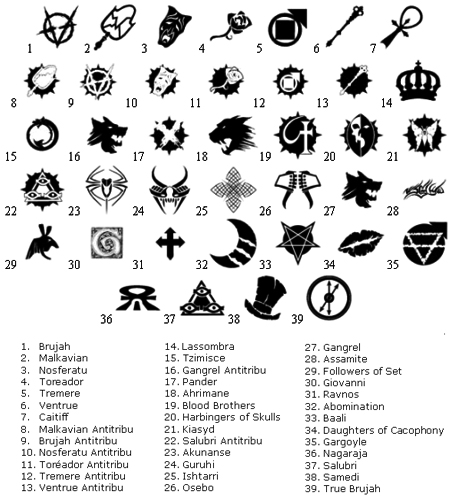
Image result for vampire the masquerade clan symbols
Even more symbolism..


This makes VtM a dance macabre (because vampires are undead..) of different flavours. This makes vampires very deterministic, with an illusion of free will and an overwhelming feeling of being but tools in hands (or tentacles…) of greater powers. In the scope of the whole WoD, vampires are unwilling servants of the very force that want to destroy everything – with a normal circle of life – creation, destruction, decay – which creates material for creation again, vampires do not participate in it. They are a pathology, a deviation. These attributes make them actually make Gehenna self-fullfilling prophecy.

In fact, there are scholars in the vampiric metaplot that learn that (Beckett)  Gehenna might not be a one time doomsday scenario – that in fact it’s periodical or happening over extended period of time. In other words – Jyhad is Gehenna.

As for the one time event, Gehenna was introduced as a supplement for the players to choose from 4 options, should they want to end their world in traditional style:

“Wormwood” (God destroys all vampires save for a few, who are given a chance at redemption)
“Fair is Foul” (Lilith takes her vengeance on Caine and his descendants)
“Nightshade” (the Masquerade is broken and the Camarilla divided as the Antediluvians awaken)
“The Crucible of God” (the Antediluvians rise up, ruling over or destroying most of the human race)

With the 5ed out on our doorstep though, I personally opt for Beckett’s point of view…

So, it’s the doomsday that marks unlives of the vampire (and all other denizens of the World of Darkness for that matter), with every step and on every occasion. The rope tightens constantly and this is the kind of storytelling players and storytellers alike  search for by playing this system.  They want ot be scared and feel hopelesness. And they want to fight it.

Is there a way to escape the doomed fate? Is there a way to somehow escape the endless loop of Jyhad? Perhaps. But this is a subject of another post, sometime. In the meantime, listen to the rhymes of ancient vampiric texts and arm yourself, Kindred:

On these signs, you must know,
that Gehenna waits, even at the door,
as an actor waits in the wings
It is coming! It is near!

Shine black the sun!
Shine blood the moon!
Gehenna is coming soon!

 (source: http://www.coven.50webs.com/BookofNod.html)

Check some art: https://www.deviantart.com/racca/art/Vampire-The-Masquerade-Clans-92161004?q=favby:floweringwolfsbane/1551097&qo=72

https://www.deviantart.com/zero0810/art/VtM-chibi-Clan-Lasombra-206976092 (and other clan chibis)

https://www.deviantart.com/axel-tw/gallery/ (vampire clans)

“Zork: Nemesis” – a poetic, puzzling experience.

Back in high school, I had a classmate that I really didn’t like. He wasn’t really bright and wasn’t likeable. Coming from wealthy family from a regional capital town he looked down on me, a poor farmboy. We had not much subject to talk about without some ironic or sarcastic statements.But we did not want to fight, as different as we were, so the only common ground we could ever have was: computers. He was wealthy enough to have a new at the time MMX processor and top notch equipment so he boasted a lot. I listened to it, very interested in tech and, of course, in expensive and demanding games he got for his box.

One of those games, coming on 3 CD-ROMs, and therefore unaffordable by me (it was an age before CD-RWs so I couldn’t just pirate it…) was “Zork : Nemesis”. I waited for Christmas of 1996 when my colleague borrowed me the game.

You know, when you’re a kid or a teenager, getting games for Christmas is a special thing, probably remembered well for the rest of life. Especially when you receive a game like this one.

I did not play any other Zork games before this one, so I didn’t have any expectations. Later I learned this one was completely different from other Zork games, often absurd and with lighthearted storytelling. Oh no. This one is dark, very dark, with a tone of sadness throughout the whole story.

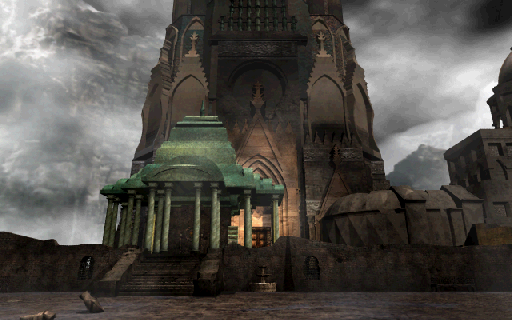
Image result for zork nemesis temple
The very beginning is intriguing…

A player arrives at a monumental cathedral, the Temple of Agrippa, a deserted and ancient looking place, the seat of powerful Alchemists. My first feeling was being completely lost – I did not know who I was, what is my goal or what I am supposed to do now. Sure, there was a booklet with the game telling some important things inside, but still the feeling persisted. With everything so alien and absolutely gorgeous surroundings and unforgetabble music I was stunned at first. Then I started exploring.

The game is mostly about exploration and solving logical puzzles (sometimes very, very hard puzzles..), hints to which are scattered around.  The very often case is that some part of the environment is blocked or locked until you solve some puzzle, and this forces a player to actually learn about the surroundings, the story and the characters.

Oh, the characters.  Not long after the start of the game one finds some sarcophagi with preserved bodies of Alchemists and can communicate with their spirits (which are being played by real actors). They ask for setting them free and warn player about their Nemesis, a grim cloud of anger that manifests right after. A goal is set – reviving the Alchemists.

Image result for zork nemesis
Bodies of Alchemists are waiting for something, preserved.

The whole journey is a journey through many bizarre and magical worlds (Alchemists’ domains) of wonder. It’s a journey of gaining knowledge of Alchemists, their goals and Nemesis itself. There’s one character that especially captures attention: Alexandra Wolfe, the violinist girl. Traces of her can be found from the very beginning of the story, and the player soon discovers that she’s a focal point of the conflict between Alchemists and the Nemesis, the frail, beautiful, sad girl.

Following the path set up by Alchemists allows the player to visit all the places belonging to powerful sages, each attuned to a separate element: fire, warth, water and wind. As the game introduces the full visual and psychological immersion to the player (you are the protagonist!), it’s in fact the player who visits those locations, making this game a sightseeing experience. Wind elemental Asylum in the cold wastes of the north, fiery Monastery with it’s rivers of lava, the desert fortress of Earth, and, my favourite, the watered musical Conservatory, each with it’s own theme and a plotline allowing the player to understand a quarter of the story.

Related image
Oh, I had a huge pleasure solving this puzzle for the first time back in 1996…

What hit me most and still makes a great impression on me is how this game was able to convey the feeling of sadness and the passing of time. “Nothing lasts forever” the game says, from the very beginning. The bittersweet, amazing and yet scary themes make the adventure perilous at times, with an encompassing secretiveness well suited for Alchemists. Everything in the story is encoded – in text, symbols, architecture, sculptures, paintings and music, there’s no straight answer anywhere.  Unraveling those mysteries is what makes the game so remarkable, and even at the end one leaves with an impression that was but a first layer of secrets waiting to be discovered there, in the Temple of Agrippa.

This is one of those stories that, by presenting it plot, leaves an impression of the huge lore and world constructed behind it (like Tolkien’s, Middle-Earth, Herbert’s Dune Universe etc…). One just wants to learn more. A pity, the next Zork games did not follow the dark and secretive pattern and went on a comical path instead.

Wanderer, enter the Alchemists’ abode and learn their knowledge. I promise you won’t forget it.

OST from the game:


James Clavell’s “Shogun” – a positive cultural shock.

From the earliest days of my life, even before I learned how to read properly, I was conditioned by my parents towards the specific view of Japanese culture. You see, it was still before the event of the Round Table discussions, and the life in Poland was circulating around the Central European style, with scarce amount of western culture influences. As rich as the culture is (1000+ years of literary and art history of Poland makes it one of the culturally richest countries in Europe) the exposure to western or far eastern lifestyles was limited.

Being in the Warsaw Pact had one drawback – everything that was from the “imperialist” zone of influence was considered inferior. Literally: “why are you using this west-german junk, buy Soviet Junost TV set instead” was a common discussion between tech-savvy people for some time. Everything was political. The point of view also included Japan (although I’ve seen one or two Hitachi radios at the time..), with its culture alien to Poles for a long time. That was about to change…

About the Polish-Japanese relations. After II World War Poles knew Japanese were an Axis power, and therefore, an enemy. Before that, there were some diplomatic relations that did not fruit any cultural exchange. There was one Japanese person and a one Pole that made some difference.  Major Fukushima Yasumasa was probably the very first Japanese to ever visit Poland, and he composed the “Porando kaiko” (“The memory of Poland”) popular poem and later a song,  known to this day. The second, was a brother of marshall Józef Piłsudski – Bronisław Piłsudski, the man that saved the Ainu people of Hokkaido culture from extinction. Nothing more than that.

Akira Kurosawa was well known, shown in the old movie block of Polish TV (“The Pearls of Old”) which had only 1 channel at the time (2nd channel was added some time after the 1st), but the ideas presented by Kurosawa were sometimes too alien to understand for a viewer, even though Kurosawa used also Shakespearean storylines in his works (“Ran”, “The throne of blood”).

And then, in the 80s, someone decided it’s a good idea to show a TV show “Shogun” to the Polish receiver. No one could foresee what impact it had on an unknowing viewer. After the emission almost all magazines started publishing ladies in kimonos, which were carefully cut out with scissors and used do decorate one’s kitchens (I remember my grandma doing this). Everyone was talking about samurai.

And this caused to yours truly, 4 years old Northon, to be dressed by his parents for a kindergarten ball (during which everybody else was either a princess, a cowboy or an American Indian archer) like this:

samurai2
1984/85..There was a huge red sun painted on my back…


Yeah, I am saying I might be biased a little while talking about the “Shogun”. The TV series was (and stil is) a magnificent show, but it’s the book that matters for me. I started my first reading of the “Shogun” around 1995 and it was so immersive and so consuming, I remember just sitting there during school holidays and reading the thing, heavily supplied with delicious Kuyavian bread with butter and plum marmelade and a teapot with Indus tea, to eat something from time to time while reading.

I might be more than biased, because even now when I think of the book I can remember the taste of that delicious marmelade…

The book tells the story of an English sailor John Blackthorne (lossely based on the historical figure of Will Adams), one of the leaders of the expedition to find the western route to Japan. After landing he and the Dutch crew find out Japan is heavily influenced by Portugese Jesuit monks, which immediately leads to imprisonment of the protestant crew for piracy. John, being a brave and a very intelligent person, manages to convince the daymyos (lords) one by one that he can be a valuable asset,  a wildcard in the domestic war of Sengoku Jidai. Kasigi Yabu, the bloodthirsty daymyo, wants to gain superiority by naval power and he wants to use Blackthorne, an excellent pilot and shipbuilder, as an asset. But then, Toranaga Yoshi, based on Tokugawa Ieyasu, appears, claiming Blackthorne from Yabu. Toranaga is a patient sage, not only a lord an a warrior – he’s a person Sun Tzu would think of as of a perfect pupil of his works. The moment in which Blackthorne boldly expresses to Toranaga, that there’s one excuse for rebellion against a liege lord – a victory over him, is the moment Toranaga sees Blackthorne in a different light. Blackthorne becomes an Anjin-san, a Sir Pilot of Toranaga. More than that, the relation between Toranaga and Anjin-san becomes more and more…friendly. They dance together, swim together and speak together.

Then there are Ishido, the Toranaga’s nemesis, Portugese with their political and religious schemes, christian daymyos… The war is bloodthirsty and lasting for decades now, so expect many heads falling down from their necks.

Oh, there are ninjas there too. Did I mentioned the ninjas?

Image result for mariko blackthorne
Richard Chamberlain and Yoko Shiamda as Anjin-san and Mariko-san in the TV series.

Initially Anjin-san doesn’t know Japanese, so everything is translated by a Portugese monk (and Blackthorne’s nemesis) Tsukku-san, until Anjin-san protests against biased translation. Then Toranaga introduces Mariko-san, a beautiful lady of the court, a catholic, as his translator.

Mariko-san forever changed my view on women. The thing is she’s a Japanese woman as Japanese society expects her to be (calm, and bowing always..), but only as her tatemae (the facade). Truth is, she’s a last member of a rebellious family, that never forgiven for her family’s demise and the loathing she received after the rebellion. She’s strong and magnificent. She’s uncontrollable and brilliant. Toranaga sees that, and he makes her his most important asset.

That’s also why Blackthorne finds her mesmerizing. That’s why she, the only Japanese person in the book, is able to understand the western idea of love.

Their romance is one of the most beautiful and emotionally engaging romances in literature, and they are probably the best written couple ever in my eyes. Oh the sweet drama! She has a bloodthirsty elite samurai husband who beats her and looks for an occasion to slaughter Blackthorne, Japanese society doesn’t look kind to barbarians, and yet they are together, against all odds. The Japanese concept of sex and how important it is in social terms only spices up things. Then there’s a number of dramatic events during which a reader would just like to drop the book and somehow go and hug them/pat their backs.

Image result for mariko blackthorne
The couple in Anjiro village, where their love evolved…


The thing is Clavell’s experiences with Japan are complicated. He was an Allied soldier, captured by Japanese during II WW and imprisoned in Singapore in P.O.W. camp, which caused him to write his bestseller “King Rat” (tbh whatever Clavell wrote was a bestseller, really..). Yet he was able to write about Japanese like no other western author. With amazement and the need to explain their culture and motives. And he succeded.

The “Shogun” is a novel about Japan and the Japanese, and reading it made me enter the path of slowly understanding the people – the path I follow to this day. This was probably one of Clavell’s masterplans – force reader to follow Anjin-san on his mentality-changing experience and become less gaijin and more – samurai.

But most of all – it’s one of the most important books of my life.

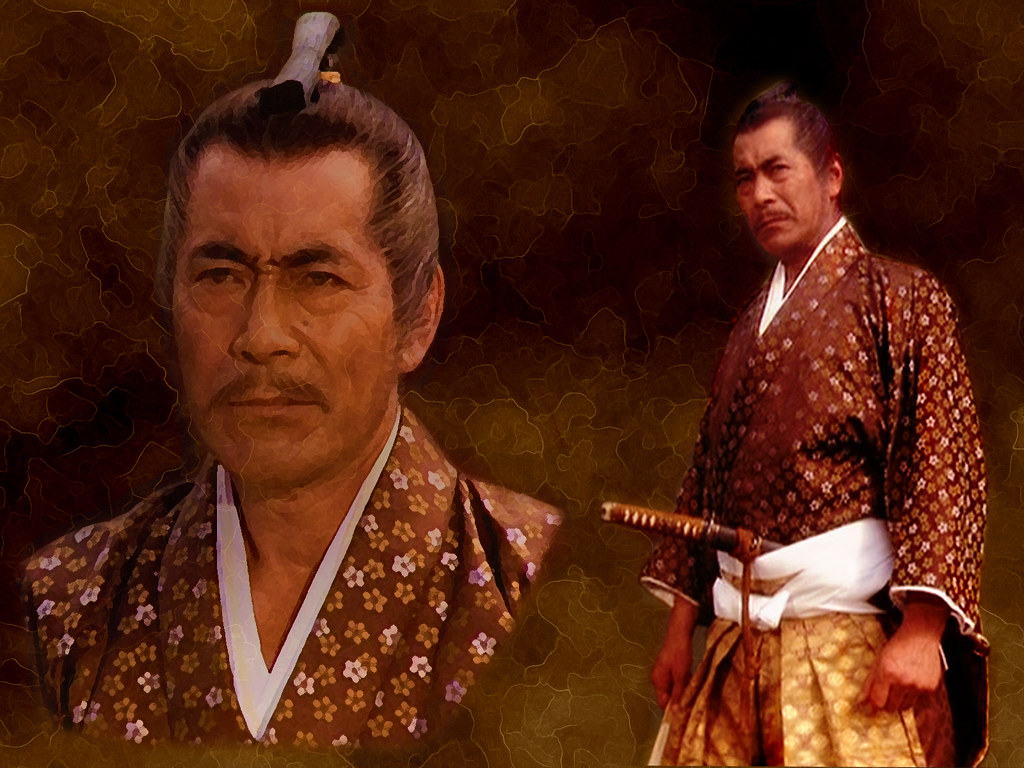
Image result for toranaga
Toshiro Mifune is glourious as Toranaga in the TV series. Damn, he’s glorious in every movie he played in…


“The Lion’s Song” – the clash of eras.

The beginning of the XXth century poses a certain problem for content receivers of XXI century – readers and gamers. With human’s limited capability of grasping the intricacies of the past ages, we often tend to identify the desired period with historical or cultural events of the said era. For example, 1863 is a period of civil war in the U.S.A, January Uprising in Poland, so it’s easy to understand the events and climate surrounding Jules Verne’s “Twenty Thousand Leagues Under the Sea” (a fun fact: the initial version of captain Nemo was : he was a Polish freedom fighter that wanted to kill Russians- that’s why the January Uprising is so important here, but the publisher told Verne that it would pose certain problems with publishing of the book, so he changed Nemo to be a son of Indian Raja), or some works of Ralph Wardo Emerson or Mark Twain. It’s easier to envision the era for the readers also, because we carry with us a lot of metadata: ranging from TV depictions of the American Civil War to paintings. It’s kinda easy for us to envision an English victorian era with all that British Empire glamour, and it’s kind of easy for us to see the slender girl with a pearl chord necklace, bobcut hairstyle dancing charleston of the 1921.

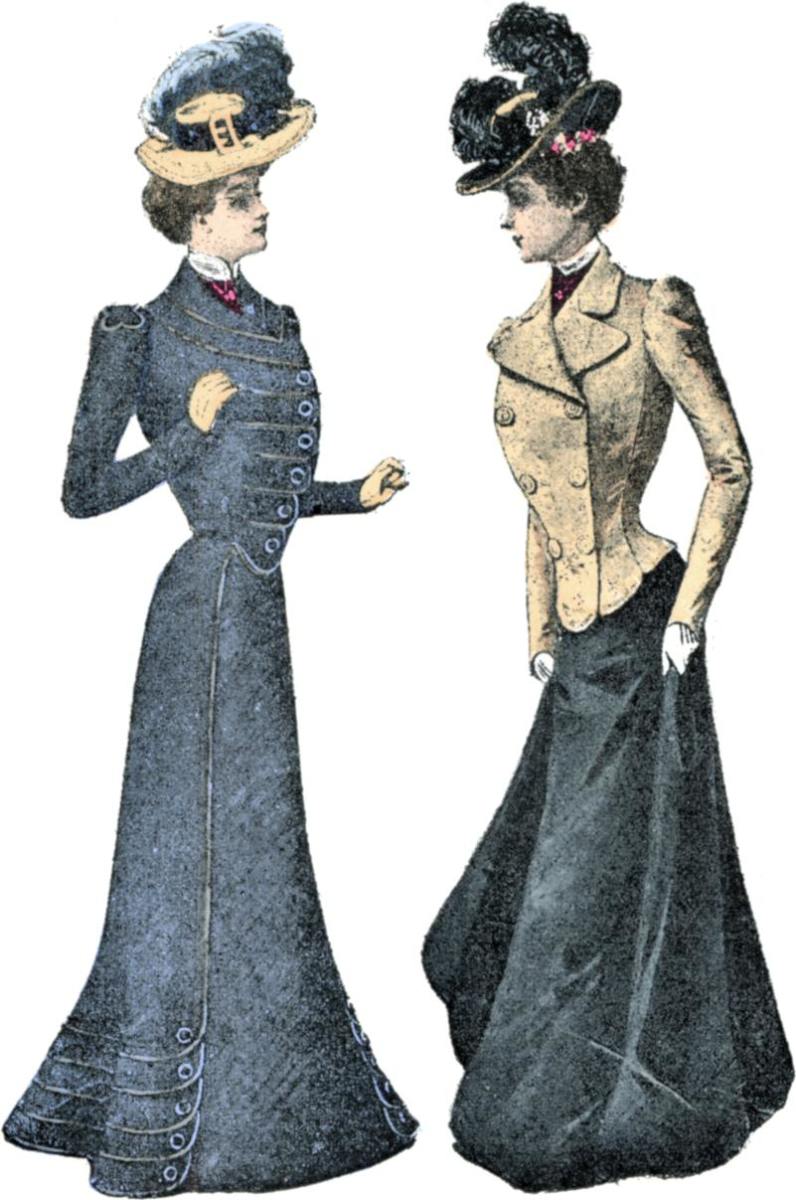
But between 1899 and 1921 there was a completely different era there, with different fashion, culture and mindset, completely overturned by a Great World War of 1914-1918. This is the era where culture, fashion, literature also were on the battleground – where Old World of feudalism and aristocracy was clashing the democratic (and fascist…) new world. In other worlds there’s a gap there that could explain how this:

Image result for 1899 fashion

became this in no more than 20 years:

Related image


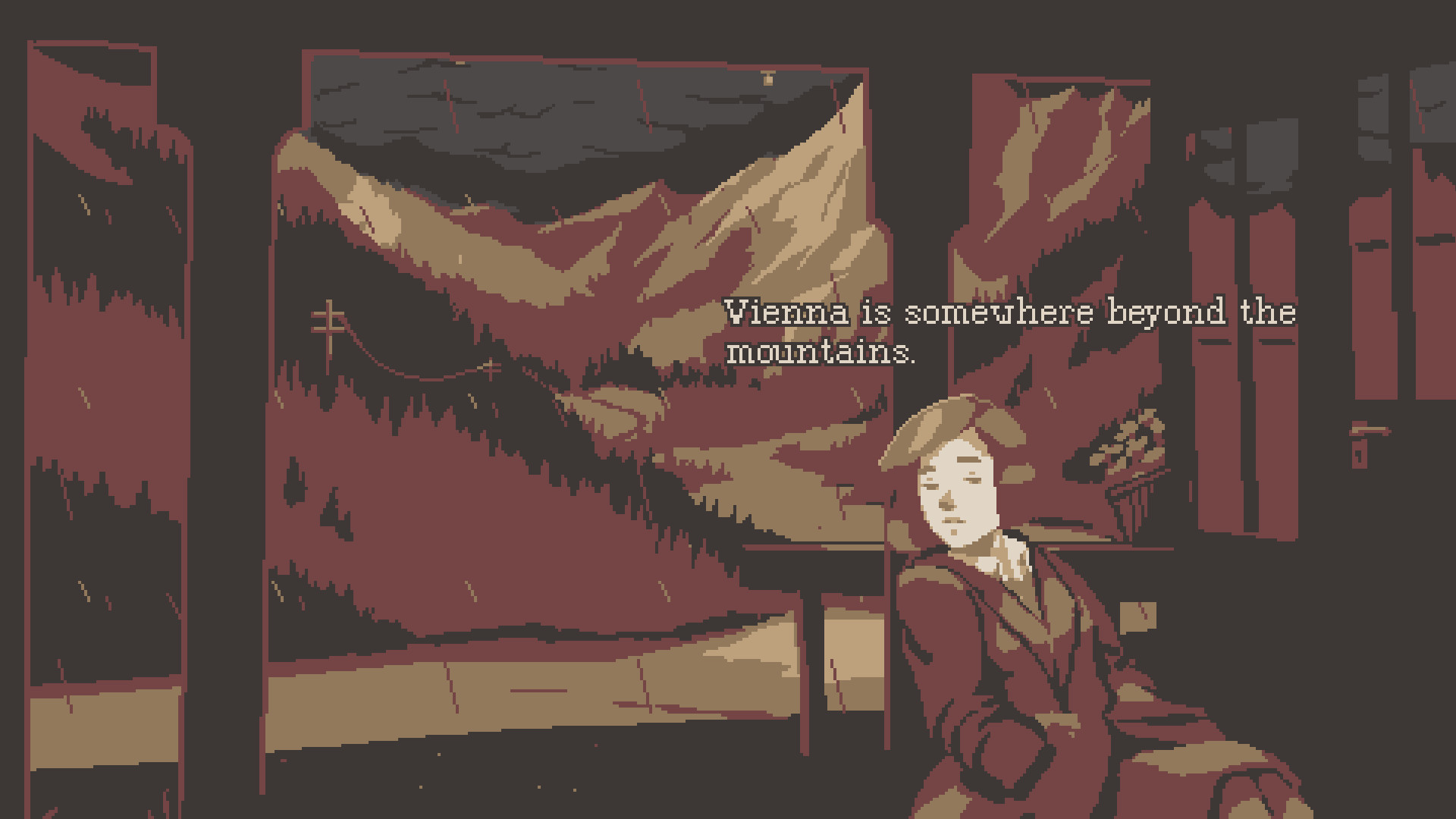
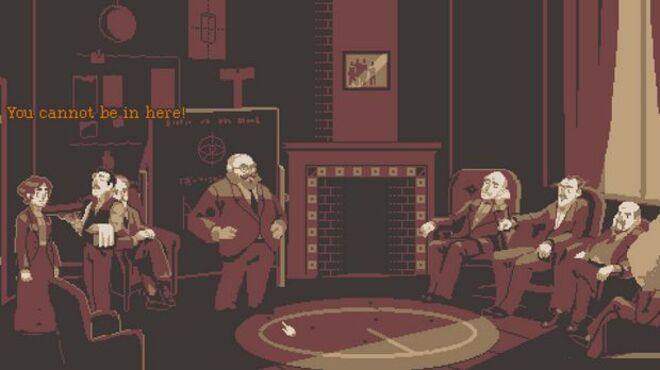
“The Lion’s Song” helped me greatly in this process. The plot evolves around three artists of the era, on the brink of their world coming to an end (WWI), people that make the difference but still delving in both: old and new worlds. These are: a violinist, struggling with a creative block and having a scandalous affair (as judged by the era’s morals…), the painter, who wants to discover the missing psychological element of his works, and a female mathematician, with brilliant mind, but in chauvinistic male world that doesn’t want to believe woman can be better than man. All these fates are placed in the capital city of Vienna – the playground of the Austrian nobility and one of the cultural capitals of Europe.

Have you seen the “Grand Budapest Hotel” movie with Ralph Fiennes? It’s based on the works of Stefan Zweig, the Austrian author depicting the old imperial Austria in his works, the nostalgia of the old, no longer existing world, that for some reasons has great appeal to us in the XXIst century – with it’s morals, demeanor, refined tastes, subtlety. You can expect the same from “The Lion’s Song”

Image result for the lion's song game
The musician.

The game is an overture – all three fates intertwine, though not directly, and choices do matter – the results of player’s actions lead to the grand conclusion in the 4th act. This is one of the three areas this game truly shines in: composition that shows how culture impact the lives of a common man, how it allows us to survive in the perils of human history – the said historical events mentioned by me above. The second area of brilliance is emotions – the game is able to present a very complicated themes and topics in a grasping and understandable manner, e.g. like the feeling of solitude of the artists overhelmed ith nostalgy.

Image result for the lion's song game
The painter (and Siegmund Freud).

While we’re at it- nostalgia is probably one of the hardest things to depict in literature and storytelling, that’s why Proust’s works are so excellent – he’s a master of the art.

Third area of excellence is the audiovisual layer. Sepia colour palette used gives the impression of an old photograph, yet is sharp and allows to feel the environment. Music, being the part of the story after all, is brilliant and enhances experiences of dialogues and monologues magnificently.

Image result for the lion's song game
The mathemathician (and a band of chauvinist professors..).

All things combined, the game is a marvelous trip one hundred years to the past, to the era of Marcel Proust and others, unknown titans of the world of tomorrow, the shapers of culture of today. I cannot recommend it enough.

Playing this game gave me the feeling of a caged pigeon suddenly released into the air with a rapid opening of the cage. How about that?

The “Amber” saga by R.Zelazny.

The problem of being overwhelmed by the information chaos these days affects literature (and the whole storytelling world) deeply. Never before in any age of humankind were humans so exposed to the neverending flow of information. The stream of data no human being is able to fully grasp and process. Being overwhelmed with the news coming in from various sources (often contradictory), publishers flooding the market with new movies, games, books, we engage our defense mechanisms to remain sane. We start to filter everything with the coinstrain of the smallest amount of energy needed for that filtering as an expense. In other words – we became lazy and picky.

The problem is even bigger when one notices the quality of the works today is worse than several decades ago. From the publisher’s point of view though, times never been better because for them quantity trumps the quality – it’s easier to manipulate the prices in the world of information chaos, and if you have big data tools like certain companies, then you already have won the race.

Far to often I pick the book praised by the sellers and readers alike these days, to find out it’s shallow, made entirely of well known and worn off tropes, using combinatorics as a way of developing a story and completely unworthy of my time. For example, in the current world overflood with zombie content, there are only 2 zombie related titles in all industries (game, movie, book, comicbook etc) that are worth something in my oppinion. And I am not talking about the “Walking Dead” here – this one is as bad as the others.

You know what? I think I’ll start describing the whole problem as a “zombie effect of storytelling” from now on.

In such perilous times I tend to look back at the books I read before and those I missed. I turn to classics for a solution for my hunger.  And in the most perilous times, when I need the immediate storytelling injection I tend to re-read the stories that proven valuable and worthy.

Roger Zelazny’s “Amber” saga is one of safe bets here.

Image result for amber zelazny
The true world of Amber

Zelazny was a very known author in my salad days. He was considered to be one of the masters of the fantasy/sci-fi genre. It’s kinda sad to see him today known by many only as “G.R.R. Martin’s friend from the Santa Fe writing circle”.  It’s probably also because Zelazny created many of those tropes freely used these days in “zombie effect” affected works, and it’s really hard to distinguish the originality of his works.

The “Amber” saga is epic. It’s a story of intertwining worlds, a multiverse of realities , but fake realities. There is only one true reality there, Amber. All others are but a reflection, combinatorics affected constructs, a “zombie effect” worlds if you will. Of course these are sometimes interesting, sometimes ridiculous, but the point is, they exist. And they seem to becreated and  governed by some cosmic order there.

Nothing further from the truth. It’s chaos that rules everything here. Or rather, Chaos I should say, because Chaos itself becomes entity in the saga. The mathematical idea of fractal functions affects also these story deeply, and one of the most important points in the story is the inability of the protagonist to understand the patterns the Chaos is generating. Or rather, a Pattern – an incomprehensible fractal knowing and understanding which promises godlike powers.

It’s not that our protagonists are without powers – in fact they are almost gods. They are immortal, and even unkillable at times. And they are filled with a hunger of power. In fact, the “Game of Thrones”, the overhyped (the book has a  great writing style, kudos to Martin, but the contents are just pointless, soap opera style pointless!) bestseller of the last decade, takes a lot from “Amber” (and remember Martin and Zelazny were buddies).  But when it comes to the story, “Amber” is much. much better in my eyes, to this very day.

Image result for amber tarot
Tarot plays a big role in Amber. Cards are used for .. .communication, and more…

The power struggle between the ruling family of “Amber” (including our main proagonist Corwin and later, Merlin) spreads across said realities, making the resolution of the conflict complicated. Defeated can retreat to some safe reality, regroup and plan a counterattack with usage of newly acquired resources. But that’s only the facade of the real conflict in the background and the real question arise the deeper one delves into the story. What at start is yet another fantastical conflict of demigods becomes a philosophical dispute.

Did you notice that every mythology constructed around gods, if consistent and complex enough, has to become a philosophical dispute?

I must say, that uncovering the layers of depth of the “Amber” saga is very rewarding, especially today, in the Age of Mediocrity.

Today, when we stumble upon magic in literary works, it just serves as a tool. We got used so much to fireballs, lightning bolts and adava kedavras there’s no more amazement, no more magic in magic. Harry Potter’s magic is just another way of shooting from AK-47 or using a pitchfork…

Heh, the “zombie effect era”, the Age of Mediocrity is also the “age of trivial fireballs”.

The “Amber” revives and keeps the magic alive.


“Gone Home”- a surprise.

In a constant search for thrilling and captivating storytelling, I tend to often pick up horror novels or games. With a lot of mediocre and a lot more of bad content out there, one has to be very, very careful while picking something to read or play. So I watched the trailer of “Gone Home”, and understood it was another horror game, placed in the abandoned house, with jumpscares and spectres. I am not a fan of cheap jumpscares, I prefer the psychological horror instead, but the thing looked interesting enough.

I am not sure what made the creators to produce a trailer advertising this game as a horror game. Perhaps they wanted to attract attention (succesfully as you can see…)? Or maybe they wanted to play a prank on an unknowing player such as myself? It really doesn’t matter, because in the end I was able to play that interesting and important story.

The year is 1995, Oregon. Katie, a student, comes back from overseas to her family home in a fictional Boon county.  To her amazement she finds nobody there, so she starts searching the house for the clues where her family might be. During the search she finds an objects from the mid 90s era (casettes, Street Fighter videogame etc) as well as other objects reminding her of her family: her father Terry, a failed writer who makes a living by being an electronics handyman, her mother Janice, who pursues her director of wildlife consservation career, and her sister Samantha.

Samantha. Game focuses on her from the very beginning, when Katie finds a note from Samantha on the door, asking not to investigate what happened.

For me it sounded as an invitation to actually investigate…

During exploration Katie finds more and more messages from Samantha, or items shedding light on Samantha’s life. Freshly after moving in to this new house, Sam was estranged. She couldn’t find a common ground with other teenagers at school, she felt lonely and misunderstood. Eventually she met Yolanda, a military school cadet. They started sharing interests like grunge music and Street Fighter game, and, eventually, became romantically involved. When the whole thing was found out by sam’s and Katie’s parents, they started living in denial her daughter was lebian and started imposing some humiliating regulations, like the one Sam’s bedroom has to be opened at all times when Yolanda was visiting.

Again, I don’t want to spoil the story. I just want to highlight that this game is one of the most important games there to depict the LGBT problems of the 90’s, and of the current times, still. I’m a straight guy, so I have to learn about that anguish, feeling of injustice and pain people like Samantha still feel in the world of self righteous idiots who use religion (the worst tool there is) and morality (non-validated morality; morality requires constant validation –  Socrates…)  to justify their worst behaviour. The evil that actually makes people like Samantha suffer.

Because evil it is. Socrates argued that no one wants to be evil, yet people still are becoming as such. What are the mechanics of evil then? A higher power, like the devil? Highly unlikely – for me the devil doesn’t exist, as there’s no god or gods. One cannot prove god, not with a scientific method, and without scientific method a proof is as valid as me saying that elven warriors rode dinosaurs in the medieval Kraków – a complete and utter bollocks. Lets focus on certainties instead: what is certain is human ignorance and carelesness. Let me emphasize:

Evil is born out of ignorance.

That’s why it is so important to learn .

That’s why it is so important to learn about other people, other cultures and viewpoints. That is why multicultiralism is better than xenophoby and monoculturalism,although not without its own perils (yet still better!).  Without knowledge there can be no idea of wrongdoing. Take the SSmen and Wehrmacht military – the German Nazi butchers of the II WW. Did they think themselves evil? No, not until they learned the cause and effect of their actions, and some of them, sincerely understood they were evil, while the rest remained in the darkness. What was the difference?  The knowledge about the whole picture.

Games like “Gone Home” are doing the blessed job of letting us, gay, trans or straight, know of the suffering and anguish of another person. The pain that could lead to broken lives, broken promises and depression. The storytelling that makes us feel the problem and by engaging the emotional intelligence, to grasp it better. Shortly – to employ our empathy, and thus, to become a better human.

Do I have to say more?


Stanisław Lem – “The Cyberiad”

Science fiction and fantasy genres have this problem of sorts. A problem of focusing to much on the world building instead of the story. There are countless stories about aliens and elves that tell about just aliens and elves. Painting new worlds is interesting and it also can be interesting to absorb such stories, but in a longer run these are boring, repetitive and often reuse the same character creation or plot creation patterns.

Unless the story is not about the world-building. Unless the world building serves to tell a story.

Stanisław Lem was a Polish writer with a lot of events in his life that would potentially break a less willed person. He came from the Lwów, which was Polish back then (today’s Lviv, Ukraine) from a family of scientists, matemathicians (Lwów math’s school was one of the strongest on the planet). He survived two occupations – German and Soviet during the II WW, with all their ruthlessness. He has seen a lot of dead people and gory scenes.

Image result for stanisław lem
Stanisław Lem. P.K.Dick was convinced Lem is not a real person but a KGB cell to destroy western literature. Bollocks, but Lem is really that good 🙂

It’s not puzzling that his faith in deities and humanity dwindled. Yet, he engaged his all mental powers in an epic attempt to understand it all – the human condition, the suffering, the motors of human behaviour. He managed to do this and left a lot of brilliant works with prognoses of the future.

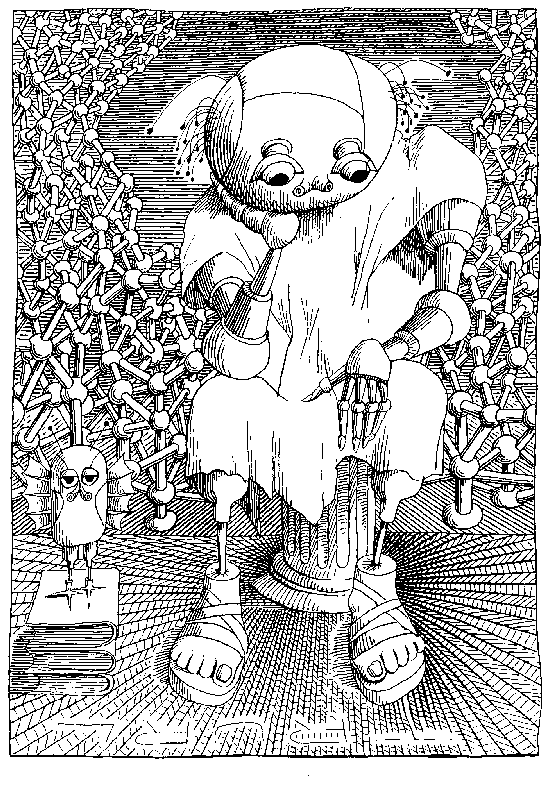
“The Cyberiad” is one of those works. First published in 1965 it features two “constructors” – Trurl and Klapaucius in a distant future. Now, the said constructors are not human – they are a robotic entities, minds no longer made of flesh and no longer constrained by human limits. The only thing that constraints them is the reality itself, but as “constructors” they are constantly breaking or getting around the laws of universe, producing and creating the unthinkable – whims of galactic powers, legendary machines etc. Whatever challenge is there, they’re up to it, with the only limits being their own mind boundaries.

At least they think so…

The problem is they are deeply flawed. In all that futuristic, godlike advancement they embody, they still have limitations. They tend to be shortsighted with that particular kind of being shortsighted when one says “oh, lets kill all the pests in the farmland with the strongest pesticide ever!” just to find out later on that all birds died from hunger after bugs were eradicated. They are arrogant and tend to choose their own ego above all reason. And they have issues with morality.

Image result for trurl
Trurl, with all his genius, faces real problems while teaching his offspring Ciphranio. Ah, the nature of free will….

Morality is one of the most frequent themes in Lem’s works. For example – is it moral to create artificial life (intelligence) with artificial pain implemented? It’s what they did more than once. Do you, my dear reader, think this is an artificial problem? Well, there’s a game called “The Sims” (I believe deeply inspired by Lem’s works, knowing that one of the cheatcodes in game is “klapaucius”….) where there are artificial humans with artificial pain implemented, they cry, they can be hurt, they can feel sorrow and they can die… Lem asks – is that moral? What is the difference between the human and the machine? Trurl and Klapaucius themselves prove there is none. The whole civilizations in The Cyberiad are robotic as well. Lem dissects humans in one of the stories (robotic entities call human “palefaces” and tell stories about them to their offspring  – the paleface is the monster to scare children with) – the paleface is a machine, according to robots, with a multitude of slippery tubes with fluids with oxidizing effect  and hence, highly toxic for metallic robots. Human machines are flawed and cinstrained much more than robots, but they are cunning enough to survive.

The civilizations surrounding the constructors are flawed too. They are archaic, have watcher-kings and electro-knights, metallic-princesses and null-dragons. This is one of the most brilliant ways in the whole literature to show to the reader this one truth: technical advancement does not make us smarter. Want to argue? Science proves than our memory capabilities decrease with memory storing technology advancements, for example. An average ancient Athenian philosopher had a lot better brain than a Ph.D. today. He didn’t just have the data.

So the robotic entities feel silly and very retro. They don’t need constructors to do make their world a better place, even if they are capable of it. They just want entertainment. Seeing what today world is, just think how much energy of an individual daily goes to ecology and how much into entertainment. If I used the time I have to write this article to gather and sort some trash instead… I have an excuse that I want to share some important things, but in the end it’s entertainment mostly – isn’t it?

Our future versions of ourselves are flawed just like us.

There’s no better future, there’s just a different future. Of course if we don’t kill ourselves before then. We tend to create and create, think that technological advancement advances us. Lem shows that illusion. Because ultimately we face the same problems our ancestors faced. Sure, we extended our lifespans and make travel easier, but that’s about it. We still kill, make arbitrary decisions without full knowledge, chase after achievements to feed our ever-hungry ego. And in the end we produce more sorrow.

What “The Cyberiad” is not is the gimmicky sci-fi with lasers and spaceships. It’s a search for human happiness and perfect society. And it seems there’s just no way to achieve any of these two…Humankind and robotkind are just far to flawed.

A note for a non-Polish reader. Polish is the second hardest language on Earth (after Chinese). I am not exagerrating, I am nearly 40 y.o. and there’s a lot of things to learn still. When it comes to way of describing the world and using the words that seem synonymous but in fact aren’t because they have a slightly different metainformation or emotional pressure in them, there’s probably not many other languages like this one. (e.g. I use English to write these posts normally to make it readable for  people over the world, but know this that this language feels … flat). It’s hard to show how it works, it’s like Eskimo or Inuite having dozens words to describe snow, with the difference Polish has similar for almost everything. See here and here to get the idea. Plus the hardest grammar ever (“like Greek, Russian and English combined” ) . With that preamble here comes a fact: the writing style of Lem is just stunning. Beautiful, intelligent, with phrases so perfect and beautifully constructed he got me gazing at those for a minute there and thinking “damn… that is something”. This style causes me blush when I think how imperfect my spoken and written Polish is (and again, I am a native Polish speaker with M.Sc.Eng degree….). I wish I could speak and write Polish as Stanisław Lem did. This means it probable looses a lot in translation. I dare to say the perfect way to read Lem is to learn Polish, the same way the perfect way to read Proust is to learn French and Nabokov to learn Russian. But the translation is very good too ,although it does loose some things; in the original poem (translation below), a mathematician dies with the broken heart in the last verse :). Rate the quality of the translation yourselves (the fragment is about the AI built by Trurl that could solve any problem, including poetry):

Klapaucius thought, and thought some more. Finally he nodded and said:
“Very well. Let’s have a love poem, lyrical, pastoral, and expressed in the language of pure mathematics. Tensor algebra mainly, with a little topology and higher calculus, if need be. But with feeling, you understand, and in the cybernetic spirit.”
“Love and tensor algebra? Have you taken leave of your senses?” Trurl began, but stopped, for his electronic bard was already declaiming:
Come, let us hasten to a higher plane,
Where dyads tread the fairy fields of Venn,
Their indices bedecked from one to n,
Commingled in an endless Markov chain!
Come, every frustum longs to be a cone,
And every vector dreams of matrices.
Hark to the gentle gradient of the breeze:
It whispers of a more ergodic zone.
In Riemann, Hilbert, or in Banach space
Let superscripts and subscripts go their ways.
Our asymptotes no longer out of phase,
We shall encounter, counting, face to face.
I’ll grant thee random access to my heart,
Thou’lt tell me all the constants of thy love;
And so we two shall all love’s lemmas prove,
And in our bound partition never part.
For what did Cauchy know, or Christoffel,
Or Fourier, or any Boole or Euler,
Wielding their compasses, their pens and rulers,
Of thy supernal sinusoidal spell?
Cancel me not — for what then shall remain?
Abscissas, some mantissas, modules, modes,
A root or two, a torus and a node:
The inverse of my verse, a null domain.
Ellipse of bliss, converge, O lips divine!
The product of our scalars is defined!
Cyberiad draws nigh, and the skew mind
Cuts capers like a happy haversine.
I see the eigenvalue in thine eye,
I hear the tender tensor in thy sigh.
Bernoulli would have been content to die,
Had he but known such a2 cos 2 phi

Just perfect. The content, the style, the philosophy. Perfect. Unwillingly, Lem’s is one of my favourite philosophers of 20th century.

Nota bene If you want to watch some material about the language itself, to see I am not exaggerating , here you go, it should give you the idea (turn the subtitles on, because there’s some Polish spoken in there) :


Sanitarium – psychological problems in videogames part 3

Building tension in a story is a very hard task. In writing it’s difficult because it’s really hard to compile text the way the tension contained within unfolds in the reader’s mind as expected. In videogames it’s sometimes twice that hard: the first thing is the writing – dialogues and scene descriptions, the second being other media, like sound and graphics. It is to easy to make what was supposed to be a creepy story a ridiculous  one. Especially when that story contains supernatural or psychological elements.

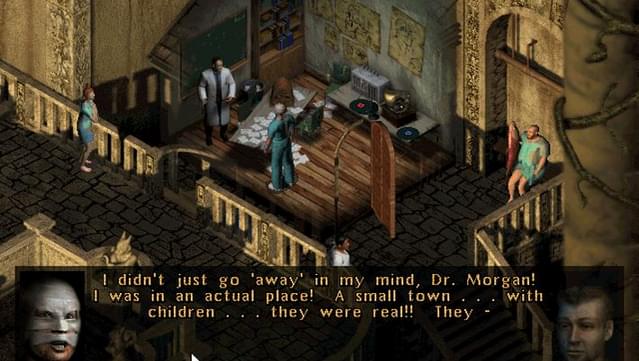
“Sanitarium” is a very special game. Right from the very beginning it builds up the said tension. First of all, after seeing the intro of a doctor trying to get to his office ASAP for some reason we wake up in an asylum. And not the regular asylum, but a heavily overgothicized, grim version of one. Our nameless protagonist has the whole head covered in bandages and an amnesia. The very first contact with the surroundings is based on fear.  Fear of the unknown place, unknown people, lunatics in the state of psychotic episode as the tower they are placed in is about to explode.

Image result for sanitarium game
The tower…. See the patient banging the wall with his head? Brrr….

Then it gets better and better. Our protagonist starts having visions. First of all there’s an angelic figure that embodies the sadness and the genuine care for our protagonist and that is she that takes him away from the exploding tower. Max, because finally our protagonist is able to remember his own name, is miraculously saved. Or rather placed on a perilous journey of finding himself. He lands in the land of heavily disfigured children withour adults taking care for them and exploited by an alien entity. There a player learns an important lesson about Max – he’s empathethic and compassionate. This is the first clue to the puzzle, because at this point a player is completely puzzled what it is all about.

Max journeys through many places having some interludes in the asylum, which makes him believe (which is supported by one o the doctor) he is insane and experiencing just delusionary visions. But world after world he unravels there’s far more to it – he goes throught the comic-book like setting where he has to save the world, the sad memory of his deceased sister (one of the most heartgripping moments in the game, and probably in the whole game industry), the domain of the dead and the Aztec village.

The game constanly builds up tension, the plot thickens, becomes denser as Max and the player move towards more and more answers, which in turn produce more and more questions. The solid world surrounding Max, that at one point makes Max to start accept the fact he is insane, becomes more and more fluid. To the point one can think Max is really shaping the world around him somehow, and the player slowly stops believing in Max’s insanity. Max feels disturbed and hurt, but logical, and in all his logic he’s a feeling and a deeply caring person. This just doesn’t add up.

Image result for sanitarium game
A medical examination and a psychiatric ward. Something doesn’t feel right though…

Tension is built also by the growing urge of doing something, yet no player nor Max know what it could be. One just feels it, as Max is being forced to solve more and more problems around him, that these problems are but a tip of an iceberg, and in fact, there’s something else to be solved, elsewhere. This uncertainty is the main stressing factor, and the deepest cause of this game being so memorable, in my oppinion.

That feeling that you have to do something, to complete something, but you cannot remember what it was is infuriating. Max directs his attention to other tasks, because idlesness is the one thing here that truly makes both protagonist and the player, insane.

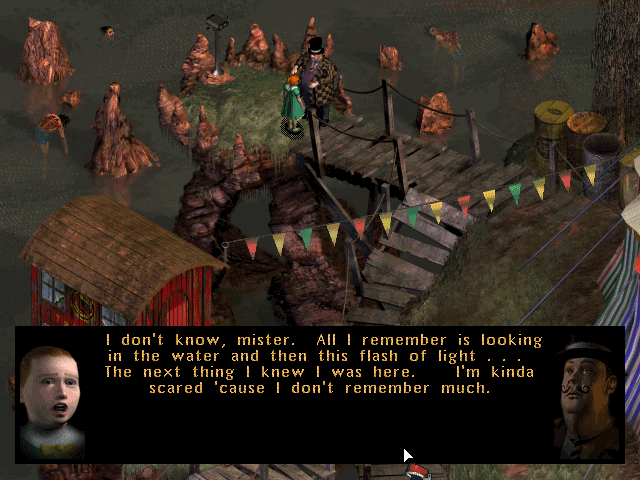
And there’s a moment when Max stops being Max at all. He becomes his deceased sister, visiting a circus on an island. The island and its denizens are cut off form the land because there’s a huge Kraken in the sea surrounding the place, that kills everyone that wants to leave. It’s really hard to express how bizarre the felling of the place is, and how out of place the characters there are. In this oniric place the urge of doing something important, to understand, is just overwhelming.

The journey of the mind goes through many stages in this title. Battling amnesia and trying to understand the symbolism of the world around Max is the true challenge of this game, and the main highlight of it’s writing.

I will not spoil it for you anymore. If you want to unravel its mysteries, learn the truth about the angelic entity and the urge of doing something Max has, then pick it up, play it if you haven’t already. The game aged a little but it’s still beautiful and heart-touching. I replayed it a dozen times and will never forget it.

Image result for sanitarium game
The circus and a kraken victims (in the water)..